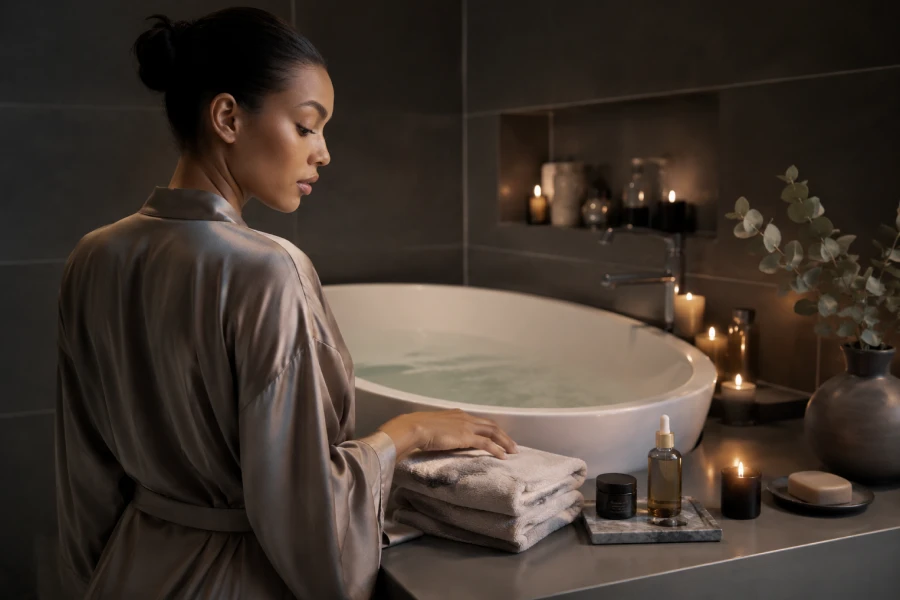
A soothing spa evening begins before any treatment. The mood forms through anticipation and preparation. A relaxing home spa experience needs a gentle transition. That transition separates self care from regular chores. Without it, the evening can feel rushed. With it, ordinary products feel more luxurious. You create space for attention and comfort. The room becomes part of the ritual. Your pace slows before your body does. That is why preparation carries so much power.
Many people treat rest like a reward. That makes relaxation feel difficult to accept. Give yourself permission before arranging products. Decide that this time has real value. A relaxing home spa experience starts with that choice. You are not stealing time from productivity. You are restoring energy that daily life spends. A relaxing spa night becomes easier with that mindset. Permission softens guilt before it grows. Rest works better when you welcome it.
The senses shape the entire mood. Warmth relaxes muscles and signals safety. Soft fabrics create physical comfort quickly. Gentle scent can support emotional ease. Quiet sound reduces mental pressure. A relaxing home spa experience blends these cues intentionally. Choose fewer sensory elements, not more. Too much scent or sound can overwhelm. Let each detail support calm. The best atmosphere feels layered but simple.
A messy room can pull attention away. Clear visible clutter from the main surface. Fold towels before the ritual begins. Place products in the order used. Set water nearby before your hands get damp. A peaceful home retreat depends on those small choices. Preparation keeps you from interrupting yourself. The space starts feeling intentional almost immediately. You do not need perfection. You need fewer distractions competing for attention.
Too many treatments can make rest feel busy. A packed routine turns soothing into scheduling. Choose two or three steps instead. Let each one have enough time. A relaxing home spa experience values depth over quantity. You can cleanse, soak, and moisturize beautifully. You can also stretch and rest afterward. The point is not doing everything. The point is feeling present during each step. Simplicity protects the emotional benefit.
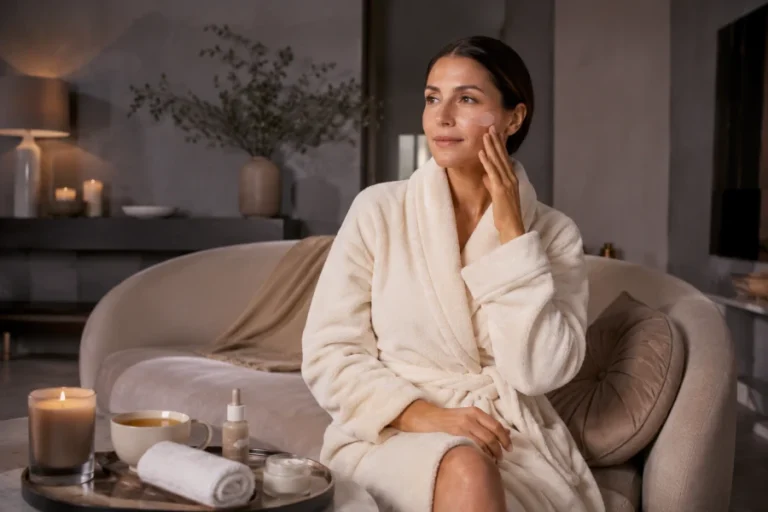
Skin care can become another rushed task. During a spa evening, slow it down. Cleanse with steady circular motions. Apply a mask only if it suits your skin. Use moisturizer with light massage. A mindful skincare pause turns routine into restoration. Notice your jaw, forehead, and shoulders. Relax those areas as you apply products. This makes skin care feel more connected. The pause matters as much as the product.
Stress often stays in the body. Shoulders tighten before we notice. Breathing becomes shallow during busy days. A relaxing home spa experience creates room to unwind. Warm water and stillness help release tension. So does stepping away from constant input. Put alerts aside for the session. Let the quiet feel slightly unfamiliar. With time, the body follows the signal. Emotional reset begins through physical comfort.
Aftercare protects the feeling you created. Choose soft clothing after bathing. Keep lights lower than usual. Avoid immediately checking messages. Drink water slowly and breathe deeper. A restorative evening routine should continue beyond the bathroom. Let your skin absorb products fully. Sit somewhere comfortable before moving on. The final moments teach your body to settle. Calm lasts longer when you do not rush away.
A weekly anchor gives rest a place. It turns self care into rhythm. Choose a night that usually feels quieter. Prepare products earlier in the day. Keep the ritual flexible when life changes. A relaxing home spa experience should support you. It should not become another obligation. Some weeks may need ten minutes. Other weeks can hold a full evening. The consistency matters more than duration.
Rest looks different for every person. Some people need silence and warmth. Others need music, scent, or movement. Notice what leaves you feeling lighter. Remove anything that feels performative or stressful. A sensory relaxation plan should feel personal. Trends can inspire, but they should not dictate. Your body gives useful feedback afterward. Follow the steps that create real ease. That makes home spa care sustainable.

Leave a comment